
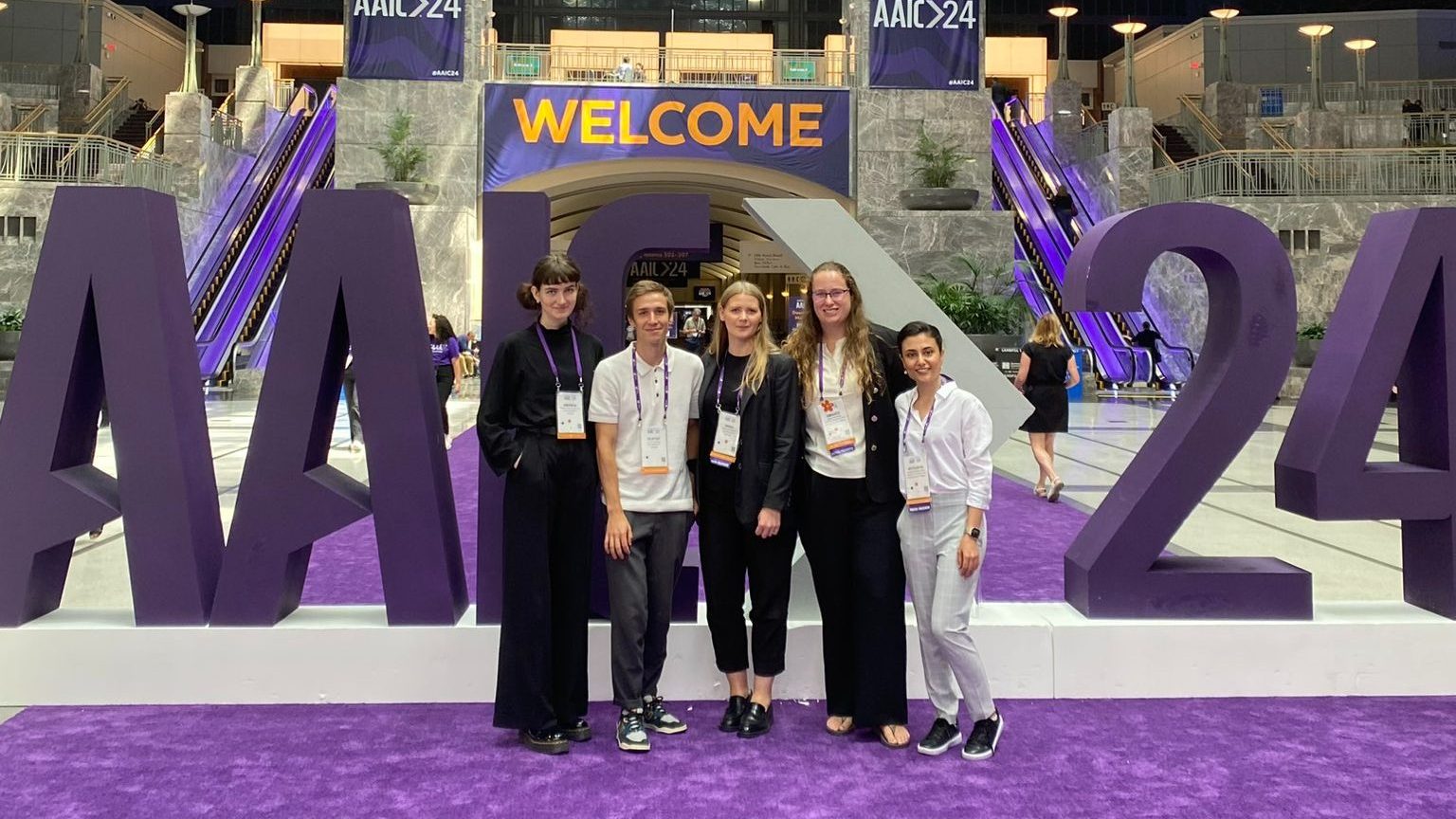
Medial Temporal Lab had a busy year at this year’s Alzheimer’s Association International Conference. Three of our doctoral students – Anika Wuestefeld, Gustaf Rådman, and Amanda Annettesdotter – presented some of their latest work.
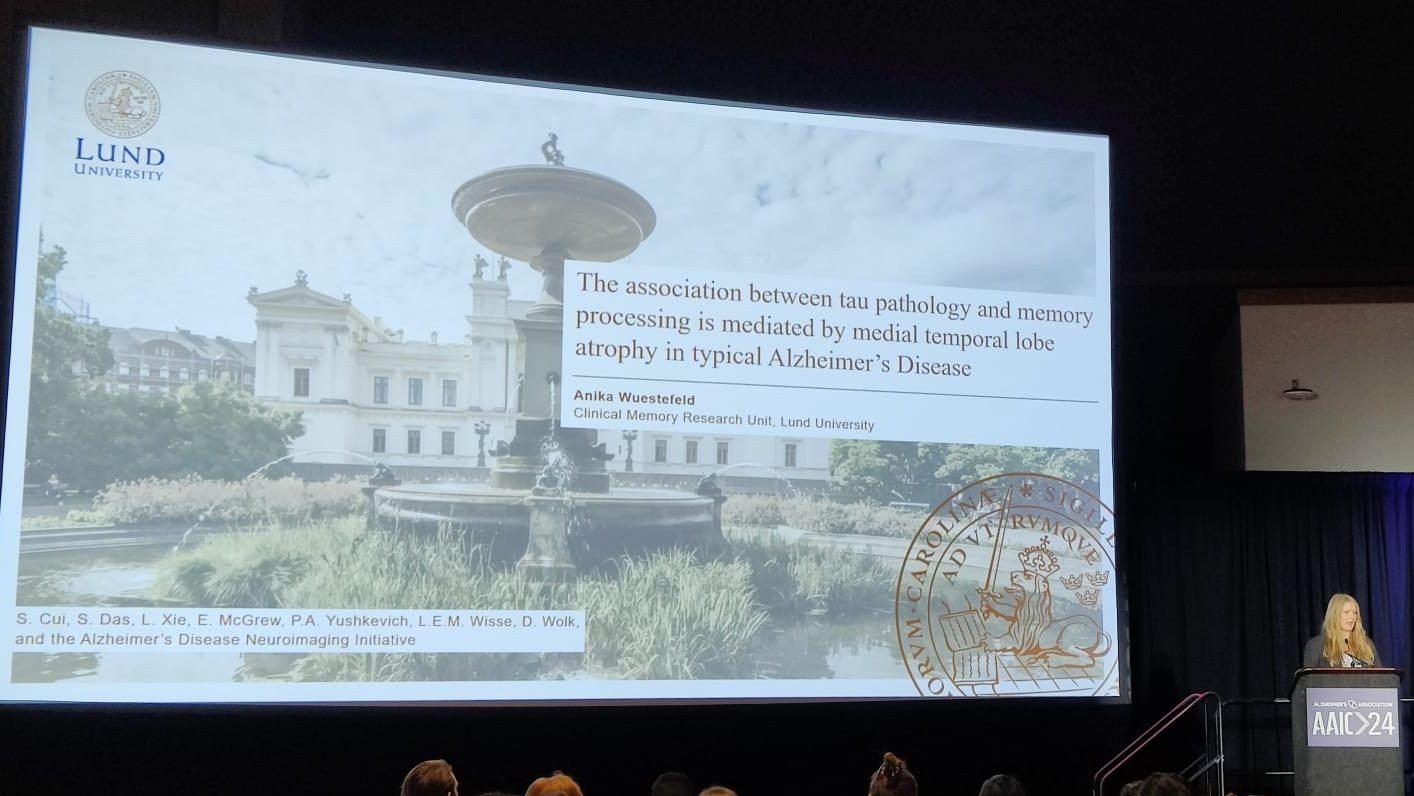
Anika Wuestefeld presented work showing that the effects of tau pathology is partially mediated by structural changes, and highlighted differential effects on subdomains of episodic memory across the AD spectrum (abstract available here). Memory impairments seem to follow from tau-induced effects in the MTL, with differential patterns observed for the subdomains. Semantic fluency impairment seems to follow from tau- induced effects in neocortical regions, while executive functioning impairment may be directly dependent on tau pathology.
Gustaf Rådman presented recent work in collaboration with University of Pennsylvania and University of Castilla La-Mancha, Spain, on the magnetic resonance imaging signature (MRI) of Hippocampal Sclerosis of Aging (HS) (abstract available here). In this work, efforts were first made to characterize the visible features of HS using ultra high resolution postmortem MRI combined with Nissl-stained histology. This was followed by translation of clinically sensitive metrics to distinguish HS from Alzheimer’s disease from postmortem MRI to antemortem MRI. Ultimately, with this work we hope to move closer to diagnosing HS prior to autopsy, which is currently not possible.

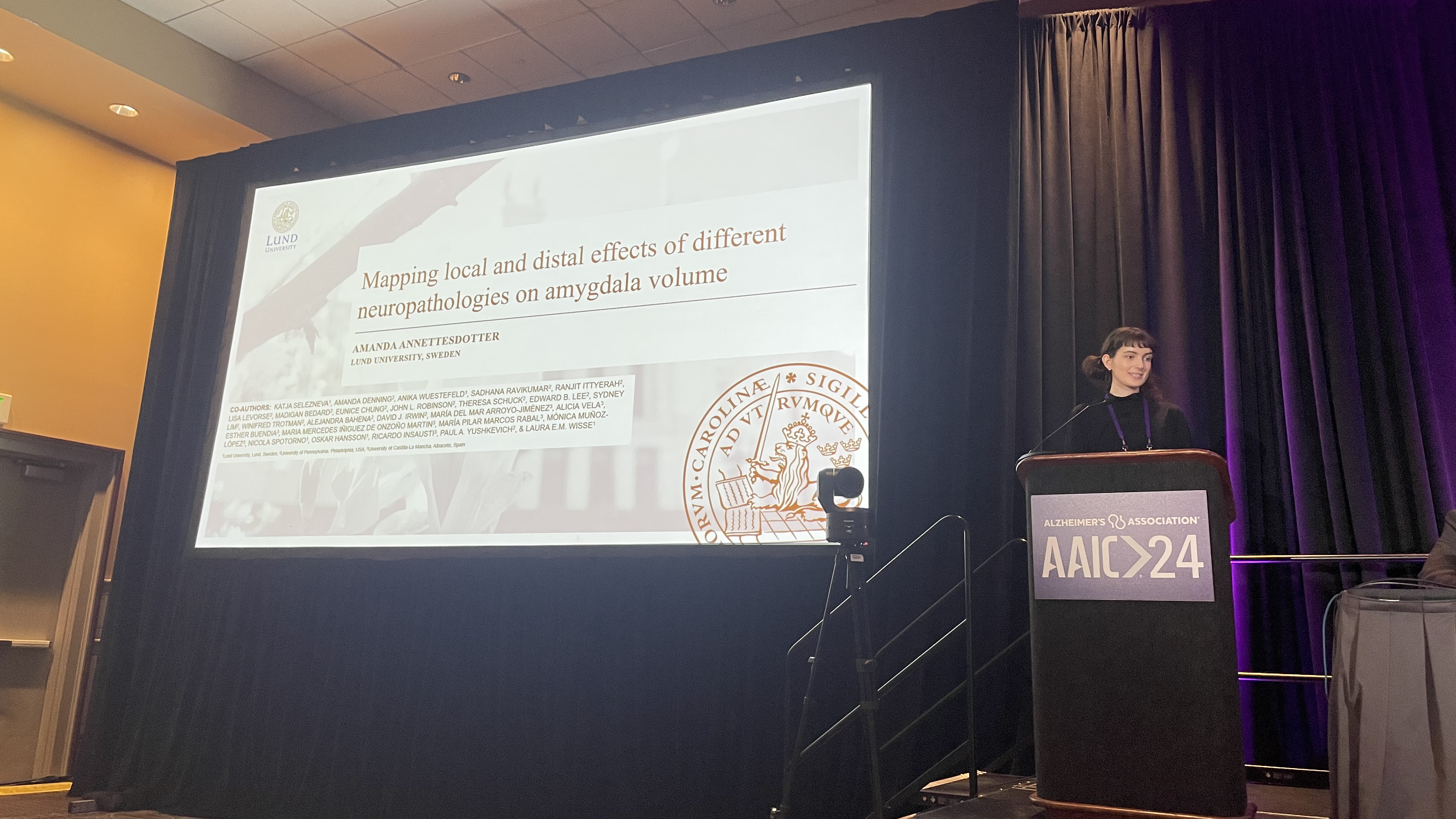
Amanda Annettesdotter presented recent work showing that tau pathology is distally associated with whole amygdala volume, through other medial temporal lobe regions. TDP-43 pathology, on the other hand, is locally assocaited with amygdala volume, so that the pathology was located within the amygdala itself. Results from exploratory analyses on the associations between neuropathologies and subregional amygdala volumes were also presented (see full abstract here). Taken together, this work contributes to the understanding of how distinct neuropathologies relate to amygdala atrophy.
 Medial Temporal Lab, Lund University